The Science Behind Our Success: Number Sense
Children with a strong number sense are flexible in their thinking. These students:
move seamlessly between the real world of quantities and the mathematical world of numbers and numerical expressions
invent their own procedures
can represent the same number in multiple ways
recognize benchmark numbers
recognize number patterns
understand that numbers are representative of objects, magnitudes, relationships, and other attributes
understand that numbers can be operated on, compared, and used for communication
Children with foundational number sense skills excel at:
mental calculation
computational estimation
judging the relative magnitude of numbers
recognizing part-whole relationships and place value concepts
problem solving and critical thinking
What is Subitizing?
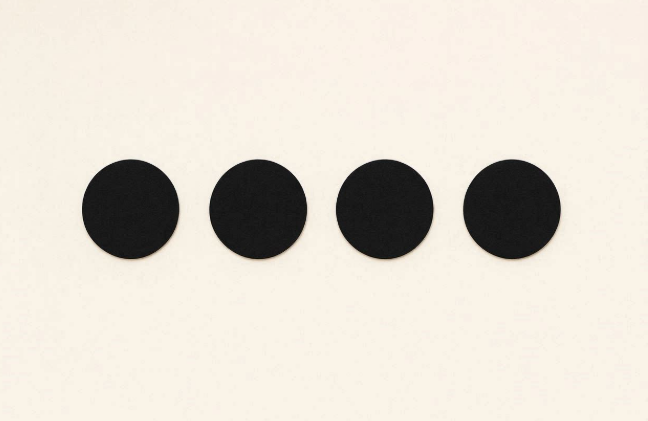
Young children can subitize four objects in a square array.
Young children cannot subitize linear arrays greater than three.
Harnessing the power of subitizing to develop number sense: Number Symphony is based on a child’s innate ability to process simple patterns, independent of experience, prior knowledge, or language. This ability is called subitizing (pronounced sue-bĭ-tye-zing); generally defined as the rapid, accurate, and confident judgment of the quantity of a set of objects, without counting.
Perceptual subitizing occurs when small numbers (typically up to 4–5 items) are instantly recognized as a whole. We offer colorful customized blocks which become keys to unlock your child’s math potential.
Conceptual subitizing involves recognizing larger numbers by breaking them into smaller, familiar groups and combining them mentally, such as seeing 6 as two groups of 3 or 8 as 5 + 3. This helps children understand addition, subtraction, and other arithmetic operations intuitively.

Number Patterns that Foster Number Sense in K-2 Student — A Brain Based Model