

What is Number Symphony?
Number Symphony is a structured, teacher-led math program that develops number sense through the 4-Group Method, hands-on learning, visual patterns, and individualized instruction. This dynamic math program offers mastery through interaction.
We understand that choosing a math program for your child is an important decision. Families often have questions about how classes work, what students experience, and whether a class will be the right fit.
Below are answers to the questions parents most often ask before joining Number Symphony. Our goal is to make every student feel supported, encouraged, and excited about developing their math skills.

What Parents Want to Know
-
Yes. Number Symphony classes help students develop skills that support many types of school assignments.
Students learn how to:
master mental calculation and computational estimates
judge the relative magnitude of numbers
recognize part-whole relationships and place value concepts
problem solve through critical thinking and experimentation
These skills support both creative and academic math tasks and empower students.
-
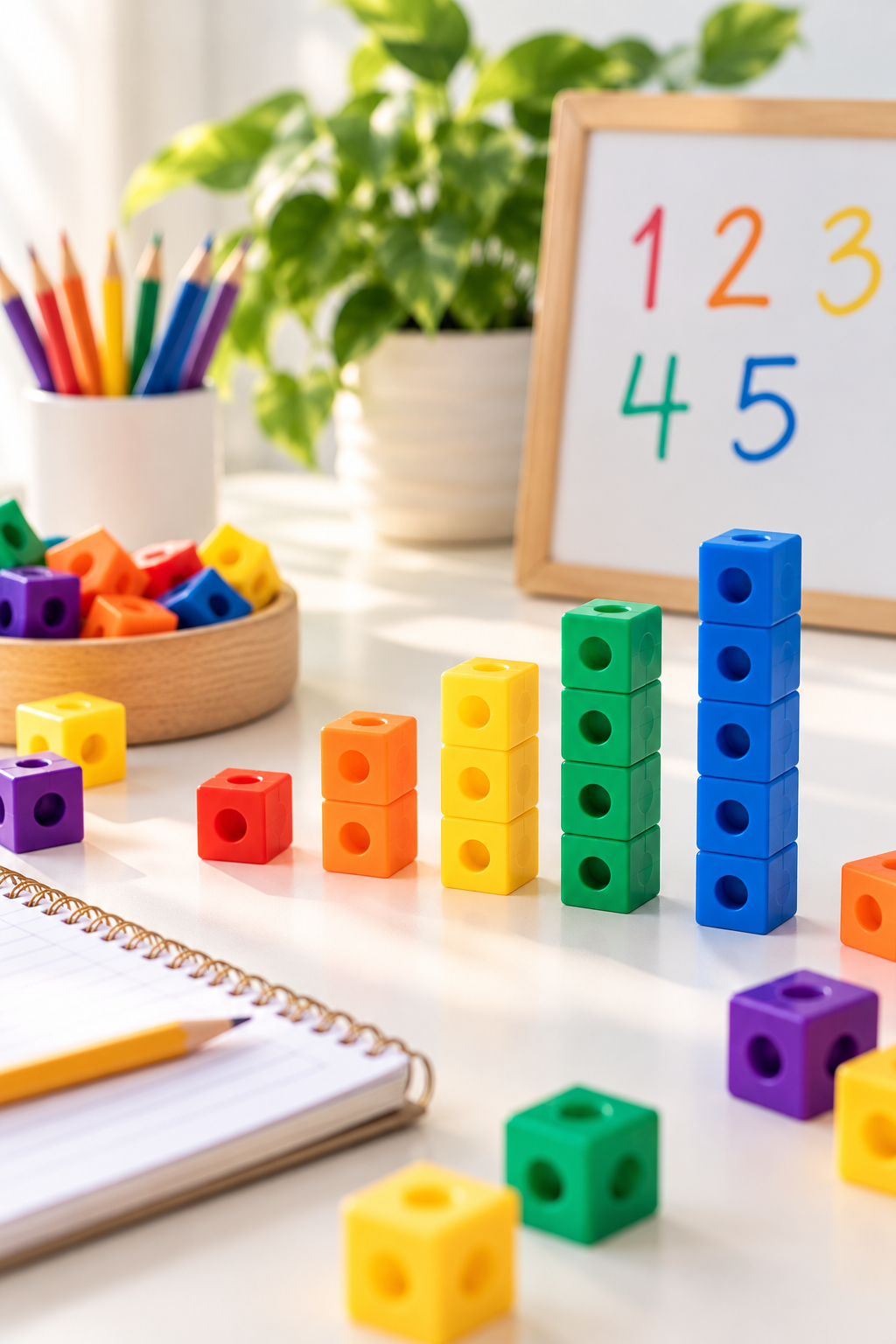
Number Symphony students have a dedicated live master-level teacher for every class. Each half hour lesson is highly interactive and designed to help students build math skills using a range of manipulatives, such as blocks, cards, and games.
Students typically:
• begin the class with an assessment of previous concepts
• organize 4-group math blocks for the next more advanced concept
• engage in real-time problem solving through conversation and use of manipulatives
• review content
• receive feedback to strengthen their math skillsClasses are structured to keep students engaged while developing foundational number sense skills and confidence.
-
Number Symphony is unique because it relies on brain research to teach mathematical concepts. This research tells us that children have the innate ability to glance at four objects in a square pattern and have confidence there are four items. This ability is called subitizing. Many math programs today ask children to arrange objects, either in a line or randomly, and then count them. When objects are presented this way, children are unable to confidently and accurately know how many there are without counting them repeatedly. As the number of objects increases, it becomes even more difficult and children make counting mistakes. Research tells us that the brain seeks and relates to patterns. Our program is based on four objects in a square pattern making this program not only unique but extremely effective.
-
Learning styles refer to the different methods people use to understand, process, and remember information. While individuals may have preferences, many exhibit multiple styles, known as multimodal learning.
Visual learning is a style in which information is best learned when associated with images, i.e. your child does well with a chart to keep track of chores. By representing information spatially and with images, children are able to focus on meaning and make better use of their visual memory. Visual learners make up approximately 65% of the population. Number Symphony is a powerful model for visual learners.
Auditory learning is a style in which a person learns most effectively by listening to information delivered orally, i.e. you ask your child to feed the dog and he completes the task. Auditory learners make up about 30% of the population. The auditory input in a Number Symphony classroom is constant, as the student and teacher engage in intentional conversation related to skills development.
Our program supports all types of learners, and each class offers multiple auditory, visual, and kinesthetic experiences to help every child succeed.